

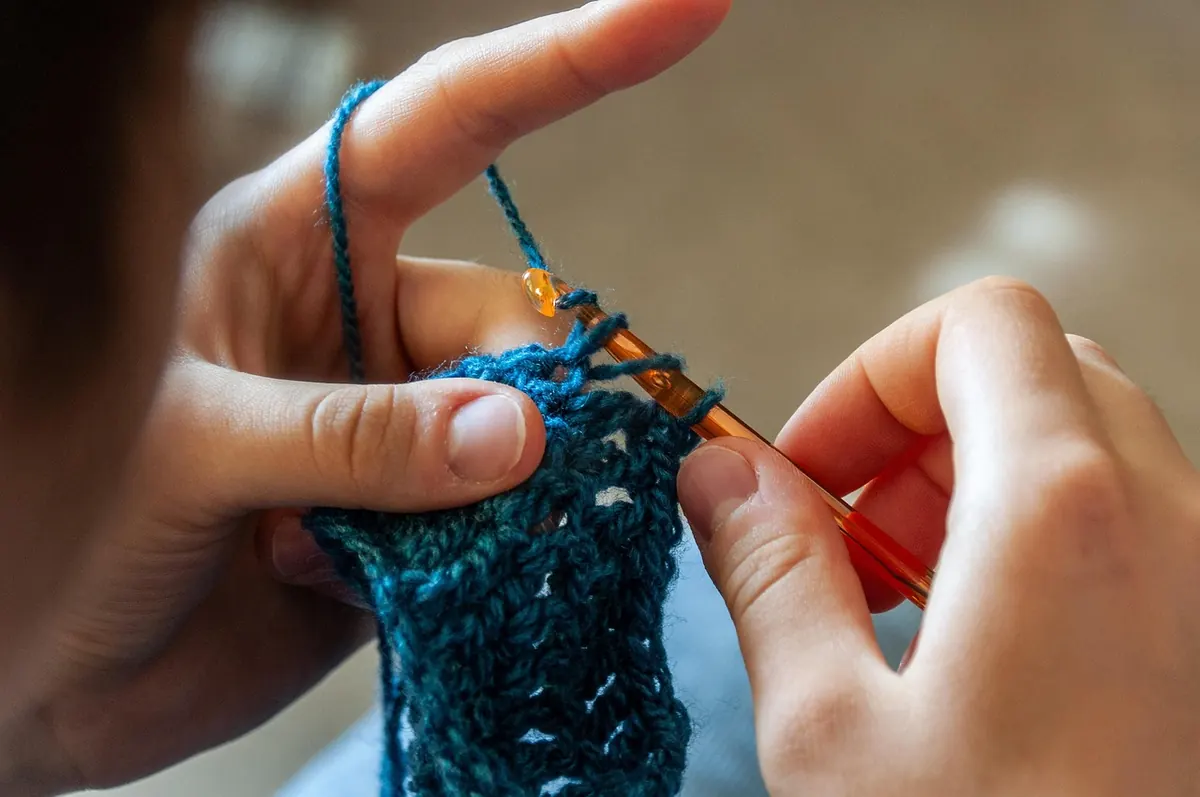

Coastal knitting has its own rhythm. The air smells of salt and wet stone, the light stays soft, and nothing—not laundry, not firewood, not a freshly washed sweater—dries quite when you expect it to. Blocking, the step that turns a lumpy piece of knitting into something with real shape, asks more of you here than it does inland. None of that is a reason to skip it. With a few adjustments, damp air becomes something you work with rather than against.
What coastal air does to a wet piece
Wool, alpaca, cotton and linen all take up moisture from the air. In a house with steady humidity, a garment that has been soaked and pinned will keep releasing water very slowly, and the outer surface can feel dry while the collar, cuffs and seams are still cool and heavy. That is the first thing to understand: dryness is not a single moment, it is a gradient.
The second is that wet fibre is heavy, and weight pulls. A sweater pinned out on a bed with no support underneath will sag between the pins; a shawl hung over a rail will stretch into a long, sad triangle. Salt adds a quieter problem. If you wear knits on the beach or against wet skin, residue left in the fibres can make them feel stiff and slightly scratchy, so a proper rinse matters more than it does a few miles inland.
The advantage of your climate is that humid air keeps fibres relaxed and forgiving. You have more working time to nudge a hem straight or open a lace pattern than someone in a dry, heated flat. Use it.
Wash first, and wash cool
Blocking a garment you have worn all winter without washing it just sets the creases and the dirt in place. Wash first, block second, always.
- Fill a basin with cool or barely lukewarm water and a wool-safe wash. Too warm, and you risk shrinkage you cannot undo.
- Submerge the piece and let it sit for ten to fifteen minutes. Press it down gently with your palms; do not agitate, rub or scrub.
- Lift it out supporting the whole weight with both hands, and squeeze—never wring. Empty the basin and refill with water at the same temperature for the rinse. A sudden shift from warm to cold is what felts wool.
- Rinse until the water runs clear. This is the step that lifts out salt and soap residue.
If the label says hand wash only, believe it. If your machine has a genuine wool cycle and you trust it, a mesh bag and a low spin still work—but keep the temperature consistent from wash to rinse.
Getting the water out without stretching anything
Lay a clean bath towel flat, put the garment on it, roll the whole thing into a sausage and press down along its length. Repeat with a second towel if the first comes up soaked. This removes a surprising amount of water with no tension on the fabric at all.
If your machine's spin cycle is gentle, a two-minute spin inside a mesh bag will finish the job. What you must not do is hang a wet knit. Even for five minutes. Water gathers at the lowest point, and that is how a jumper ends up with a stretched body and a tight yoke.
A word on heavy pieces
Blankets, long cardigans and anything with a lot of cotton need extra care. Fold them onto a drying rack in a way that spreads the weight across several bars, or block them flat on the floor. Cotton in particular has little memory—once it stretches under its own weight, it tends to stay that way.
Pinning to measurements, not to hope
Find the schematic that came with the pattern, or measure a garment you already own and like. Write the numbers down before you start pinning. Blocking without a target is just stretching.
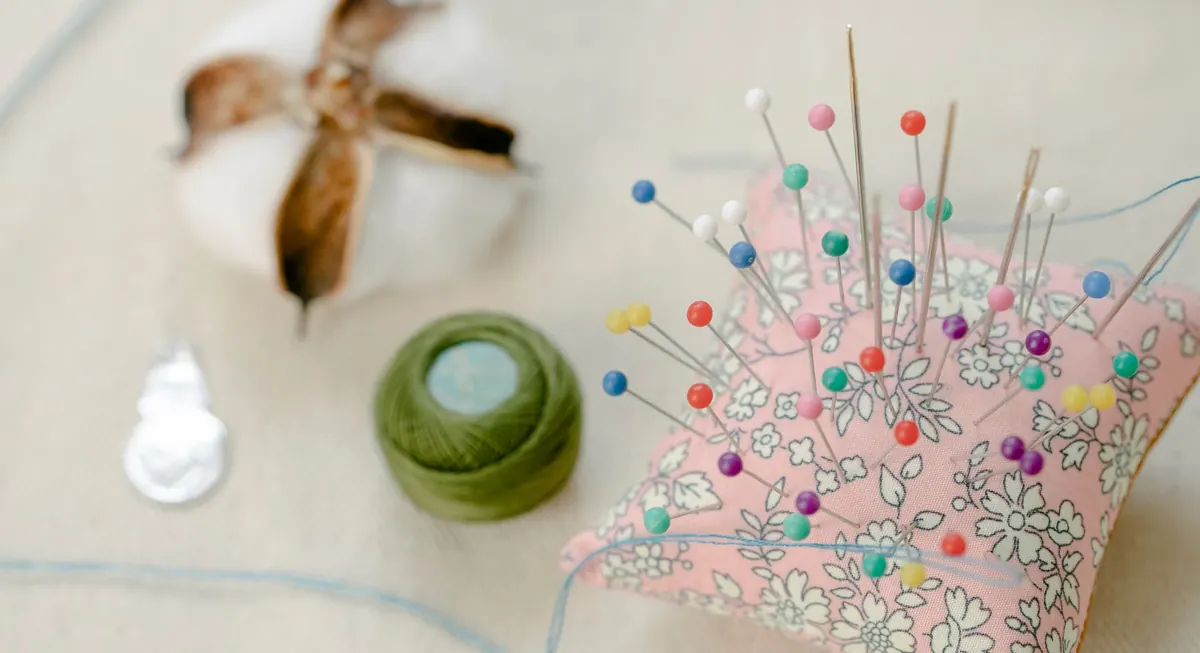
- Use stainless steel pins. Ordinary pins rust in humid air, and a rust mark on a pale wool sweater is permanent.
- Blocking wires for straight edges. They spread tension evenly along a hem or a lace border; pins alone create scallops.
- Pin in a rhythm, roughly every two to three centimetres along an edge, alternately at slight angles so the fabric does not creep.
- Do not stretch ribbing. Ribbing is meant to pull in. Pin it at its natural relaxed width or it will never recover.
- Open lace deliberately. Lace is a mesh; the pattern only reads properly when the holes are opened to the finished measurements. It will look alarmingly large while wet and settle as it dries.
Cables and textured stitches
Pat the cables flat with your palm rather than pinning each one out. Over-stretched cables lose their depth and look limp once dry. If a piece has both lace and cables, block to the lace, then ease the cables back into shape with your fingers before the fabric dries.
Drying in damp air: airflow beats heat
This is where coastal blocking is won or lost. You cannot rush humidity, but you can move air through the room. A plain pedestal fan set on low, pointed slightly away from the piece rather than directly at it, will do more than any amount of heating. A dehumidifier in a closed room works well for the first day; crack a window for cross-ventilation on the second.
Avoid radiators and direct sun. Radiators dry the outer surface fast and leave the middle damp, and the heat stresses the fibres. Sun fades colour, and on the coast it comes with salt haze that settles on a damp surface.
Turn the piece gently once or twice a day, and test the thickest points—collar, cuffs, seam allowances, the back of a cable—with the back of your hand. Cool means damp. Expect two or three days, longer in a wet spell or in a bathroom with no window. Do not unpin early. A piece lifted while still holding moisture will pull back towards its knitted size, and the work is wasted. It should be bone dry, with no cool patches anywhere.
The seasonal checklist
Run through this at the change of season, when you put the winter knits away and bring out the lighter ones.
- Sort everything that has been worn into wash, air, and store piles.
- Wash cool with a wool-safe detergent; rinse thoroughly to lift salt and soap.
- Roll in towels and press; spin briefly if your machine allows.
- Check the pattern schematic and note the finished measurements.
- Pin out on mats with stainless pins and wires; keep ribbing unstretched.
- Set a fan on low and, if you can, run a dehumidifier for the first day.
- Turn daily; test the thickest points for coolness.
- Unpin only when completely dry, then leave flat for an hour before folding.
- Repair small holes and loose buttons now, while the piece is clean and flat.
- Store folded in breathable cotton bags with cedar or lavender, never in sealed plastic.
Before it goes back in the drawer
Give the finished piece an hour flat on the mats after you unpin it, so the shape settles with nothing pulling at it. Fold along seams where you can, and avoid hanging knits for long stretches. If you catch a faint musty smell at any point, do not store it—rewash and dry it properly, because mildew in a folded sweater spreads quietly to everything stacked beside it.
One last habit worth building: keep a small notebook in your blocking kit with the measurements that worked for each garment. Next season, in the same damp air, you will not have to guess.
Photo: Teona Swift / Pexels